Setting Boundaries: Protect Your Priorities and Move Forward

You usually start thinking about boundaries when life already feels too full — and you’re already tired.
This is where many people get stuck.
You try to set boundaries without being clear on what you’re protecting.
And that’s why boundaries so often collapse.
Why boundaries fail without priorities
At first, boundaries sound simple.
But without clear priorities, every request feels equally important.
Work feels urgent.
Other people’s needs feel reasonable.
Your own needs feel negotiable.
If everything matters, nothing is protected.
So the real question isn’t, “How do I say no more?”
It’s, “What actually matters right now?”
Until you answer that, boundaries will always feel uncomfortable, inconsistent, or selfish.
The hidden cost of not choosing your priorities
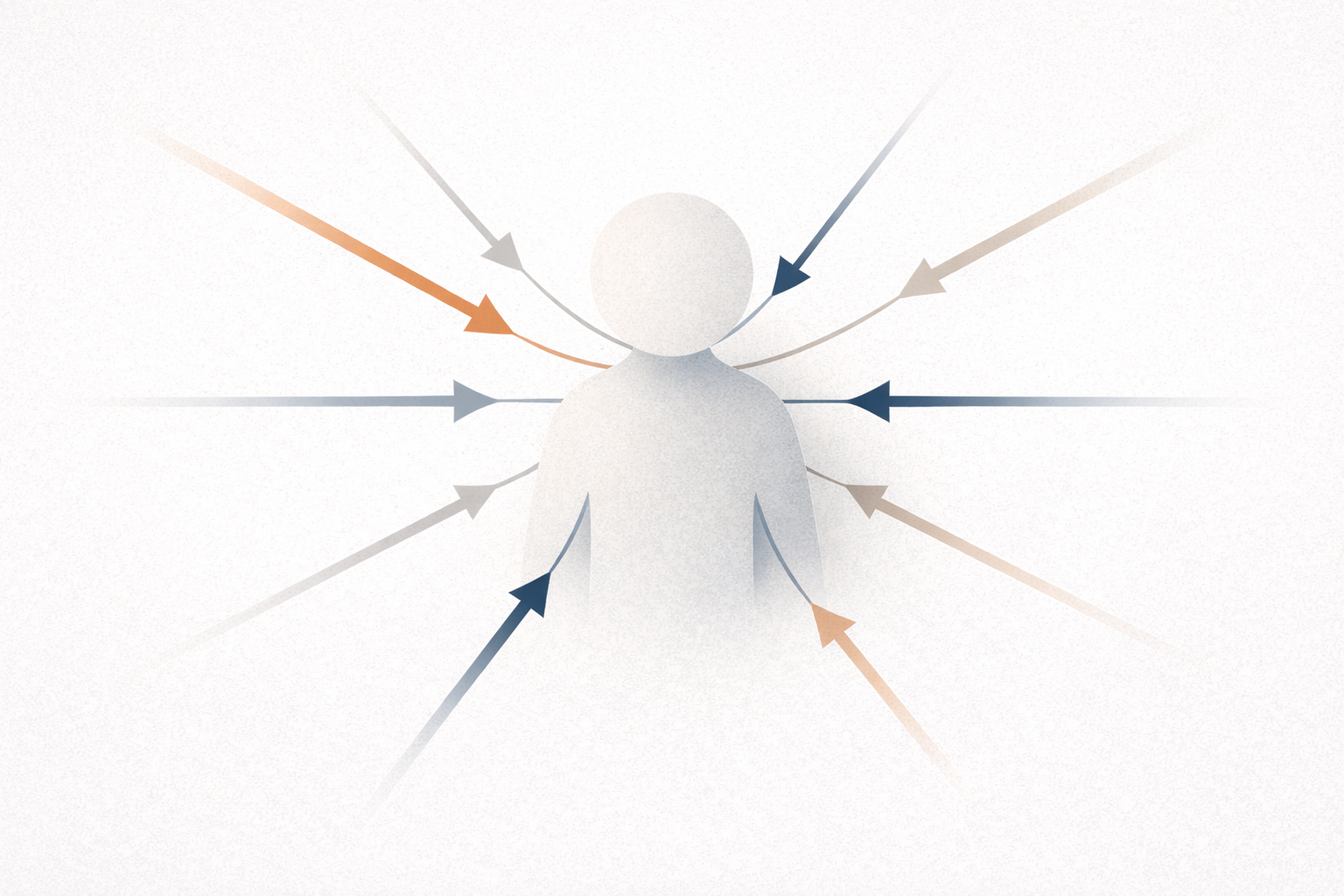
Most of us don’t consciously choose our priorities.
We inherit them.
From urgency.
From expectation.
From whoever shouts loudest.
The result is a quiet drift.
You say yes out of guilt.
You stay available out of habit.
You keep pushing because stopping feels risky.
Over time, this shows up as stress, resentment, and the sense that life is running you instead of the other way around.
So instead of starting with boundaries, start with clarity.
A simple priority filter (before you set boundaries)
If boundaries feel hard to hold, it’s usually not because you’re bad at saying no.
It’s because you’re trying to protect everything.
That’s exhausting - and impossible.
Here’s a simple filter I use with clients. It’s designed for real life, not perfect weeks.
Take a pen. Give yourself ten quiet minutes.
Then work through these three questions.
1) What must be protected right now?
This isn’t about what’s loud or urgent.
It’s about what would quietly suffer if it didn’t receive care and attention.
For example:
You say your health matters, but exercise is the first thing dropped when work ramps up.
You say family matters, but you’re present in the room and absent in your head.
You say focus matters, but your days are fragmented by constant context switching.
And something many people are dealing with right now: work overflow. Requests keep coming in. You want to keep everyone happy, so you keep saying yes. The work doesn’t stop, but the stress follows you home.
If everything feels important, pause here.
That usually means you haven’t yet decided what wins when things collide.
Boundaries only work when you know what they’re for.
2) What’s draining you without moving you forward?
These are the leaks - the things that consume energy but don’t earn their place.
Examples:
You attend meetings out of habit, even though you’re not needed.
You stay available late into the evening “just in case”.
You carry work that isn’t yours because you’re capable and others don’t step in.
And a big one that often gets overlooked:
You put yourself on hold.
You say learning matters. You talk about wanting to grow, build confidence, or deepen your skills. But learning is always postponed until “things calm down”.
The uncomfortable truth is this: things rarely calm down on their own.
Learning and Investing in yourself increases your value, your options, and your confidence.
When you consistently deprioritise learning, it’s rarely a time issue.
It’s usually a boundary issue.
3) What does “enough” look like for this season?
Most people struggle with boundaries because they don’t know where the boundary actually is.
Examples of “enough”:
Enough work might mean finishing at a time that protects sleep and recovery, unless something is genuinely critical.
Enough availability might mean being responsive during working hours, without being permanently on-call.
Enough learning might mean two protected sessions a week, treated like meetings because they’re an investment.
When “enough” isn’t defined, everything expands to fill the space.
When it is defined, trade-offs become visible.
You’re no longer saying, “I can’t.”
You’re saying, “This is enough for now.”
That’s calmer.
And it’s much easier to hold.

What changes once priorities are clear
When your priorities are vague, every request feels equal.
But when your priorities are clear, boundaries become simpler.
You stop reacting.
You start choosing.
Instead of asking, “Can I afford to say no?”
You begin asking, “Does this belong above or below what I’ve already decided matters most?”
That shift alone reduces an enormous amount of mental load.
Expect discomfort (it doesn’t mean you’re wrong)
Setting boundaries often feels uncomfortable at first.
Not because they’re wrong.
But because you’re breaking old patterns.
Guilt shows up.
Pushback happens.
You question yourself.
That’s normal.
Discomfort is often a sign you’re choosing differently, not badly.
With time, what once felt hard becomes natural.
A final thought
You don’t need tougher boundaries.
You need clearer priorities.
They’re not walls.
They’re promises you make to yourself.
And every time you honour one, you quietly reinforce the life you’re trying to build.
Start by setting your priorities today.
Not perfectly. Not forever. Just for now.
Once you’re clear on what matters most, everything else becomes easier to navigate.
In the next piece, we look at how to turn those priorities into direction - and start moving towards the things you actually want.
